Monday, March 21, 2011

How does ethnocentricity cause conflict?

Word Analysis:  ethnocentricity (n.)

Ethnocentricity is a thought-provoking word meaning the evaluation of other peoples and cultures according to the standards of one's own culture.  In order to avoid forming biased opinions of other peoples, one's ethnocentricity requires careful consideration.

When analyzed into its morphemes we see:  ethno + centr(e) + ic(e) + ity.  It is a compound word comprised of two base elements.  The first base (ethno) is bound coming from the Greek root ethnos meaning 'people, nation, tribe; a number of people accustomed to live together.'  The second base (centre) is free coming from the Latin root centrum meaning 'center; originally fixed point of the two points of a compass.' 

Historical Analysis: How does ethnocentricity cause conflict?
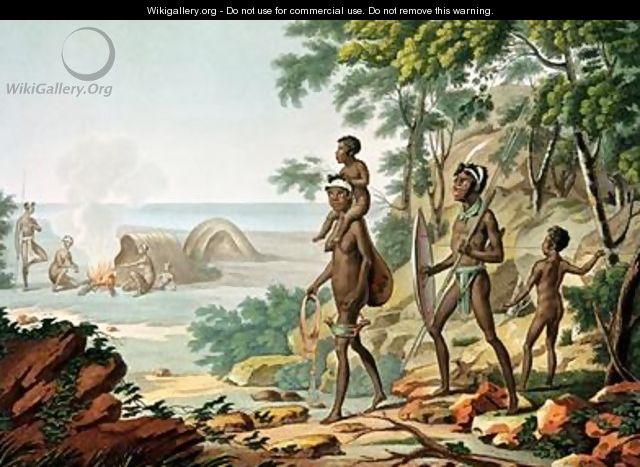

The British and the First Australians came face to face in Sydney on the 26th of January, 1788.  Both cultures viewed the other through their own cultural lens - forming opinions based on biased perceptions.

In your blog post, you will be discussing how the British ethnocentric view of the First Australians caused conflict between the two cultures.  In order to be successful, consider addressing the following points in your post:
  • Describe how the British viewed the First Australians.  What words did they use to describe them and their culture?  Use specific examples from the "First Australians" DVD and the book, "The Rabbits." 
  • Explain how the ethnocentrism of the British affected these perceptions. 
  • Discuss the conflict between the British and the First Australians that stemmed from this ethnocentricity.  Again, use specific examples from the class resources.
Your post will be graded using the Six Trait writing rubric.  Be sure your post has a clear claim, specific evidence, explanations and a conclusion.

Monday, March 14, 2011

First Australians: Perceptions

Imagine that there is going to be a meeting between you and a totally new and different group, with no shared language, completely different origins, technology, lifestyle, culture and traditions.  Photos of the group you are meeting are posted below.  Study the photos and answer the following questions on the index card provided. 
  1. What five adjectives would you use to describe the group you will be meeting?
  2. How would you describe the culture of the group to someone else?


Monday, February 21, 2011

Julius Caesar: Solo/Duet Performance Assessment


Shakespeare wrote his plays to be acted, not read. Therefore, one of the assessments for the Julius Caesar Unit is for you to act out a significant passage from the play. You may perform solo or choose to act alongside a peer in a duet performance. Please check Moodle for the description of the assessment and the rubric.

In order to prepare for this performance assessment, you need to choose a passage and complete a blog post that answers the tasks outlined below.
  • State the context of the passage (This is only 1-2 sentences).
  • Explain the meaning and the significance of the passage (This is a well-developed paragraph).
  • Identify the passage's ACT/SCENE/LINES.
  • Copy of the passage (You can copy and paste this from an online source.  Be sure to check that it copies accurately).
  • If you are part of a duet, identify your partner.
This post is due by Friday, February 25th.


Performance exemplars are provided below to serve as a guide.


Thursday, January 27, 2011

Learning Profiles


Have you ever struggled in class, feeling the need to move or change seats so you could listen better with your left ear or view the whiteboard from a different angle?

Today, Mr. Whiting led us through a variety of exercises that helped you determine your learner profile and understand the characteristics that represent it. Understanding your profile helps you and your teachers know more about how you best learn: your strengths, preferences and areas you can improve.

Now that you have a better understanding of your profile, we request that you reflect on your new learnings and share the information.  For this blogpost, write a well-developed response using the information you gained in class.  


Begin your post by stating what type of thinker you are (gestalt or logical/sequential) and your newly identified learning profile.  Following this, please respond to the sentence stems listed below by writing a well developed paragraph.  Paragraphs need to reflect what you learned about yourself as a learner and how you will use this new information to help you reach your full potential.

1. I learn best when... (use the learning profile sheet to help you with this paragraph)

2. I need to... (knowing the characteristics of your profile, what will you need to do to succeed - seating, grouping...)

3. The strategies that would help me in my learning...(consider strategies that will help you succeed - use of visuals, audio tapes of books, discussing new topics...)

4. I would like my teachers to know this about me...(what information is important for the teacher to know about you in order to best help you learn...)


Include examples/scenarios in each of the paragraphs.  Paint a picture of you as a learner, so your audience gains a clear understanding of you as a student.  

Wednesday, November 17, 2010

Renaissance DBQ ~ Written Synthesis

Part B:  Written Synthesis

Using the information from the documents in Part A and your knowledge from the Renaissance Unit, write a well-developed paragraph for the Essential Question below:

How do the actions and decisions of people effect change? 

Your paragraph should include a claim, factual evidence to support the claim, and interpretations of the evidence that explain how it supports the claim.  Use evidence from at least 2-3 sources.  If possible, include additional outside information based on your knowledge of the time period.
 

Monday, November 15, 2010

Renaissance DBQ Sources


Renaissance Document Based Question Assessment (DBQ)
On Thursday, November 4 you will begin Part A of the assessment.  The assessment is based on the accompanying documents. It is designed to test your ability to work with historical documents.  Read each source carefully, making certain you understand the vocabulary as well as the overall message of each.  As you analyze the documents, take into account the source of each document and any point of view that may be presented in the documents.
 
Historical Context
Roughly between the 15th and 17th centuries, the Renaissance began in Italy.  People were looking outside the Church for answers to their questions.  People wanted to find out more about their world by discovering it.  This humanist attitude of inquiry was a ‘rebirth’ of what was common to classical scholars from ancient Greek and Roman civilizations. The Renaissance completely changed European life, affecting various aspects such as the art, science, and beliefs of the time.  

Part A:  Source Analysis

Source 1: Print Shop
From the Mary Evan's Library.  An engraving of a printing shop (1598).
Source 2: Gutenberg Bible (circa 1455)

Source 3: Leonardo da Vinci's  The Last Supper
The Last Supper by Leonardo da Vinci.  Fresco (1498)

Source 4: Article on The Last Supper by Shelley Esaak

Why Is The Last Supper Composition Remarkable?

"First, because the disciples are all displaying very human, identifiable emotions. "The Last Supper" had certainly been painted before. Leonardo's version, though, was the first to depict real people acting like real people."

Source 5: Excerpt from a Letter
From a letter by Italian scholar Marsilio Ficino to Paul of Middleburg (1492)

"This century, like a golden age, has restored light to the arts, which almost disappeared; poetry, painting, sculpture, architecture and music.  And all this in Florence. We are achieving what had been honoured amongst the ancient people, but which has been almost forgotten since then."

Source 6:  Quote from The Prince
The Prince by Niccolo Machiavelli (1513-17)
(Machiavelli wrote this book in a bid to regain favour with the Medici – it is believed that ‘the prince’ refers to the Medici family members.)

"A prince should show that he can encourage those who have talents in the arts. He should reward those who improve in any way his city of his country. At suitable times of the year he should entertain the people with festivals or shows."

Source 7: Luther's 95 Theses
The Theses by Martin (1498)

21. Therefore those preachers of indulgences are in error, who say that by the pope's indulgences a man is freed from every penalty, and saved;

45. Christians are to be taught that he who sees a man in need, and passes him by, and gives [his money] for pardons, purchases not the indulgences of the pope, but the indignation of God.

66. The treasures of the indulgences are nets with which they now fish for the riches of men.

Sunday, October 17, 2010

How does art mirror society?

Select a Renaissance piece of art, reflect on its content and write a paragraph that discusses how it ‘tells the story’ of what was happening at that time.

Your paragraph needs to include:
• An introduction to your selected piece of art – its title, artist, date of creation and type of art (eg; oil on canvas, marble sculpture).
• A claim that states how this piece of art is a reflection of what was happening during the Renaissance.
• Evidence from the piece of art that supports your claim.
• Your interpretation of this evidence – what does the evidence tell you about life then and what connections can you draw to other areas of change and development during the Renaissance.
• A concluding sentence.

Your Blog post needs to include:
• A title.
• An image of your selected piece of art.
• Your paragraph – edited and of publication standard.

DUE TUESDAY 26th OCTOBER

Below are links to some good examples you may want to use, otherwise you may select your own piece, but make sure the content is suitable to the task.

La Primavera by Botticelli


The Ambassadors by Holbein

The School of Athens by Raphael

The Anatomy Lesson of Dr Nicolaes Tulp by Rembrandt

Vitruvian Man by da Vinci

The Statue of David by Michelangelo

The Allegory of Sight by Jan Breugel the elder

The Art of Painting - by Vermeer